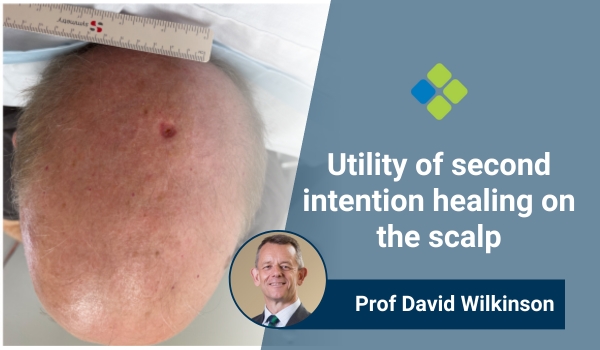
This month’s paper comes from the Australasian Journal of Dermatology and reports on the positive outcomes of a study looking at the utility of secondary intention healing (SIH).
For further information on this topic, you may be interested to learn more about the HealthCert Professional Diploma program in Skin Cancer Medicine.
This patient cohort included excision for keratinocyte cancers on the scalp, up to 5cm in diameter.
Many of us, especially if we work with elderly patients, and in more rural and remote settings will appreciate the challenge of managing scalp lesions of this sort of size.
Often our patients are on anticoagulants, have multiple comorbidities and may be quite frail.
SIH is an important alternative to flap or graft repair. Importantly, this approach – with SIH – also allows for staged excisions of cancers with indistinct margins.
This paper is well worth reading.
Read the full paper here.
- Prof David Wilkinson
Read another research summary: Actinic keratosis field cancerisation