Skip to content
Search icon

Black Friday Save 15% with code BF2026

*T&Cs apply.

Certificate pathway for nurses

Build your expertise in Melanography

Progress from the foundations of skin cancer screening through to complex lesions and dermatopathology with a structured certificate pathway designed for Registered Nurses, Nurse Practitioners and allied health professionals.

Nurse talking with patients

Progressive pathway

Build your expertise across 3 structured certificate levels

Flexible online learning

Study each certificate online at your own pace

Recognised learning

Recognised by the International Dermoscopy Society, with nurse education hours

World-leading experts

Learn from the world’s most influential dermoscopy experts

Melanography program overview

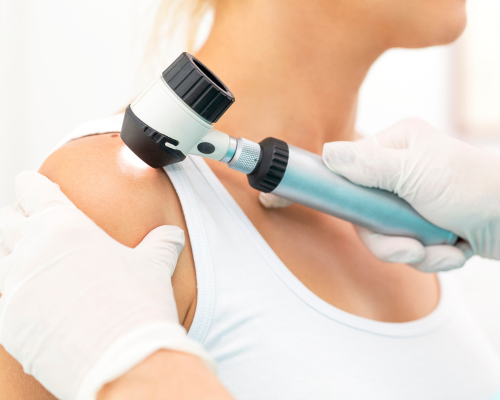
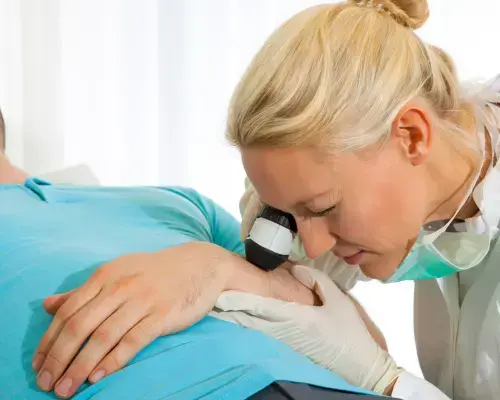
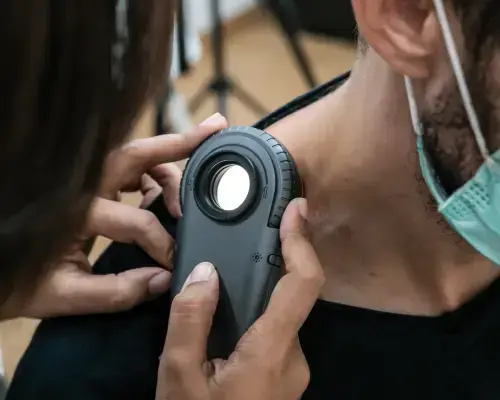
A melanographer is a nurse or health professional whose primary role is to conduct skin assessments and identify suspicious skin lesions for referral to a doctor.

The Melanography pathway for nurses is designed to progressively build the knowledge and skills to screen skin lesions with confidence — from the foundations of skin cancer medicine and dermoscopy through to difficult, rare and aggressive skin cancers.

  • Accurately screen and differentiate skin lesions for referral to a doctor for diagnosis and treatment.
  • Learn structured methods for lesion assessment, including the Chaos & Clues approach.
  • Assess lesions in patients of every age and skin type, and help detect melanoma early.
  • Progress at your own pace through three certificate levels, fully online.

Want real-world clinical experience?
Nurses nearing completion of the pathway can join a supervised clinical attachment in melanography in a dedicated skin cancer clinic in Burpengary (QLD).

Explore the clinical attachment ➔

Progress your Melanography skills step by step

Build your knowledge progressively across three certificate levels, from the foundations of skin cancer screening through to difficult lesions and dermatopathology.

Professional Certificate

Learn the foundations of primary care melanography, from identifying common benign and malignant skin lesions to best-practice skin cancer screening.

Advanced Certificate

Learn to conduct a thorough skin assessment with dermoscopy and identify suspicious lesions across all patient age groups and skin types.

Professional Diploma

Round out your melanography skills with difficult, rare and aggressive skin cancers, and gain an understanding of dermatopathology.

Explore the Melanography pathway

Compare the three certificate levels and choose the right starting point for your current experience and clinical goals.

Professional Certificate of Melanography banner image

Professional Certificate of Melanography

$1,595
Save 15% with code BF2026.
*T&Cs apply

  • The foundations of skin cancer medicine
  • The Big Three: BCC, SCC and Melanoma
  • An approach to pigmented skin lesions
  • An approach to non-pigmented skin lesions
  • Chaos and Clues
  • Benign non-melanocytic lesions
  • Malignant non-melanocytic lesions
  • Dermoscopy for pink lesions
  • Skin imaging techniques

Explore Professional Certificate
Advanced Certificate of Melanography banner image

Advanced Certificate of Melanography

$1,595
Save 15% with code BF2026.
*T&Cs apply

  • Dermoscopy for the management of non-melanoma skin cancer
  • Dermoscopy for melanocytic naevi
  • Dermoscopy for melanoma
  • The broad spectrum of BCC and keratinocyte skin cancer
  • Dermoscopy for difficult benign lesions including nevi with special features
  • Dermoscopy for screening children
  • Dermoscopy for screening young adults
  • Dermoscopy for screening older patients
  • Lesions in different skin types: Dark, fair, sun-damaged

Explore Advanced Certificate
Professional Diploma of Melanography banner image

Professional Diploma of Melanography

$1,595
Save 15% with code BF2026.
*T&Cs apply

  • Dermoscopy for difficult melanomas
  • Dermoscopy for rare skin tumours
  • Merkel cell carcinoma and rare/aggressive melanoma and non-melanoma skin cancers
  • Introduction to dermatopathology correlation cases
  • Histopathology of melanocytic lesions Part 1
  • Histopathology of melanocytic lesions Part 2
  • Specimen processing: Does the type of biopsy make a difference? Correlation cases
  • Management of special cases in skin cancer medicine

Explore Professional Diploma

Bundle & Save

Bundle two certificates in this pathway and save 5%, or three certificates and save 10%. Talk to us about deferred payment options, registrar scholarships and special rates.

 *For Australian residents only: Online course prices are shown exclusive of GST. If you are GST-registered, please enter a valid ABN at checkout to ensure GST is not applied. Otherwise, 10% GST will be added at checkout. View our FAQ for more information. 

Meet your instructors

Professor Aimilios Lallas Live Tutorial Presenter Professor Aimilios Lallas Professor Aimilios Lallas

Professor Aimilios Lallas is a dermatologist-venereologist and Professor of Dermatology at the First Department of Dermatology, Aristotle University of Thessaloniki, Greece. He is President of the International Dermoscopy Society. He specialises in skin cancer diagnosis with non-invasive techniques and in the management of patients with skin cancer. His main research interests are dermoscopy of skin tumours, the use of dermoscopy in general dermatology, and improving the management of oncology patients.

He is a co-investigator in several Phase III clinical trials of skin cancer treatment. Prof Lallas has authored more than 330 scientific papers listed on PubMed Central, most on dermoscopy and skin cancer, edited eight books and written several book chapters on dermoscopy. He has been awarded several scholarships and scientific awards, and has established scientific collaborations with numerous colleagues from several countries.

Teaching is a major part of his work. He is particularly involved in dermoscopy education, having organised and taught on numerous national and international courses, and he has supervised the training of many fellows from different countries. He is a regular invited speaker at national and international congresses and meetings, mainly on dermoscopy and on the diagnosis and management of skin cancer, sharing practical approaches that clinicians can apply in everyday skin cancer practice.

Professor John Paoli Course Presenter Professor John Paoli Professor John Paoli

Professor John Paoli is Head of the Department of Dermatology and Venereology at the University of Gothenburg in Sweden and a consultant dermatologist at Sahlgrenska University Hospital, where he leads the Mohs Surgery Center. His research group focuses on the early diagnosis of melanoma and non-melanoma skin cancers using dermoscopy, novel imaging techniques and machine learning, and on the optimal management of these tumours using medical, destructive and surgical treatment modalities.

He also runs several Nordic courses in dermoscopy and dermatological surgery for dermatologists and primary care physicians.

Prof Paoli is the Administrative Coordinator of the International Dermoscopy Society, the Treasurer and Past President of the European Society of Micrographic Surgery, and the President of the Swedish Society of Dermatologic Surgery and Oncology. He is a former Board member of the European Academy of Dermatology and Venereology and a past President of the Nordic Dermatology Association and the Swedish Society of Dermatology and Venereology.

Professor Ashfaq A. Marghoob Course Presenter Professor Ashfaq A. Marghoob Professor Ashfaq A. Marghoob

Professor Ashfaq A. Marghoob is a board-certified dermatologist and attending physician in the Dermatology Service at Memorial Sloan Kettering Skin Cancer Center, New York, USA, specialising in the diagnosis and treatment of cancers of the skin. He is the director of Memorial Sloan Kettering's regional skin cancer clinic in Long Island and consults and treats patients in the centre's outpatient facility in Manhattan.

Prof Marghoob is committed to education and clinical research, with the aim of educating physicians and the public about the importance of early skin cancer detection. He has published numerous papers on skin cancer, with an emphasis on melanoma, atypical/dysplastic nevi and congenital melanocytic nevi. His research focuses on the use of imaging instruments such as photography, dermoscopy and confocal laser microscopy to recognise skin cancer early in its development.

Professor Harald Kittler Course Presenter Professor Harald Kittler Professor Harald Kittler

Professor Harald Kittler is a Professor at the Department of Dermatology, Medical University of Vienna, Austria. He has a special clinical interest in dermoscopy of pigmented skin lesions. His main research interests are digital dermoscopy, follow-up of pigmented skin lesions and computer-assisted digital dermoscopy. Prof Kittler has published scientific articles in the field of dermoscopy, especially on digital dermoscopy and dermoscopic follow-up of melanocytic naevi.

Assoc. Professor Caterina Longo Course Presenter Assoc. Professor Caterina Longo Assoc. Professor Caterina Longo

Associate Professor Caterina Longo is a board-certified dermatologist and Director of Dermatology at the Azienda Ospedaliero-Universitaria di Modena, Italy. She was formerly Scientific Coordinator of the Skin Cancer Unit at ASMN-IRCCS, University of Modena and Reggio Emilia. She specialises in the diagnosis and treatment of skin cancers.

A/Prof Longo is actively involved in education and clinical research and has published numerous papers on skin cancer, with an emphasis on melanoma, atypical naevi, Spitz/Reed naevi and non-melanoma skin cancer. Her research focuses on the use of imaging instruments such as dermoscopy and confocal laser microscopy to recognise skin cancer early in its development.

She pioneered the use of ex vivo fluorescence confocal microscopy in Mohs micrographic surgery for basal cell carcinoma and other visceral tumours. She lectures on these topics nationally and internationally.

Dr Elvira Moscarella Course Presenter Dr Elvira Moscarella Dr Elvira Moscarella

Dr Elvira Moscarella is a dermatologist and Associate Professor at the University of Campania "Luigi Vanvitelli" in Naples, Italy, and has worked at the Santa Maria Nuova Hospital in Reggio Emilia. Her main interests are dermoscopy and reflectance confocal microscopy in skin cancer medicine.

Dr Moscarella gained her medical degree in 2005 at the Second University of Naples, completed her residency in dermatology and venereology there, and undertook further education in dermoscopy and confocal microscopy in 2008. She is a member of the European Academy of Dermatology and Venereology and the International Dermoscopy Society, and has served as Editor in Chief of the latter's newsletter and case of the month.

Assoc. Professor Iris Zalaudek Course Presenter Assoc. Professor Iris Zalaudek Assoc. Professor Iris Zalaudek

Associate Professor Iris Zalaudek is a board-certified dermatologist and Head of the Dermatology Clinic of the University of Trieste, Italy. She is a former President of the International Dermoscopy Society, a role she took up in 2016, and remains a member of its executive board. She was previously Research Director of the Non-Melanoma Skin Cancer Unit at the Medical University of Graz, Austria.

Her main research fields relate to dermato-oncology and include non-invasive skin imaging techniques and the topical and systemic treatment of skin cancer. She is also engaged in developing modern teaching methods such as online distance courses and teledermatology services, and is Director of the Master of Science program in Dermoscopy and Preventive Dermato-Oncology at the Medical University of Graz.

A/Prof Zalaudek has published more than 450 articles. Her work received the Hans-Weitgasser Prize from the Styrian Association of Dermatologists in 2003, and in 2008 she was named Best Researcher of the Medical University of Graz.

Assoc. Professor John Pyne Independent Peer Reviewer Assoc. Professor John Pyne Assoc. Professor John Pyne

Associate Professor John Pyne is a University of Sydney medical graduate. He has been conferred with a Master of Medicine (Skin Cancer) degree and PhD (thesis on dermoscopy-histopathology correlations in basal and squamous cell carcinoma) from The University of Queensland. A/Prof Pyne has previous appointments at the Melanoma Unit Royal Prince Alfred Hospital and Skin Cancer Clinic, St George Private Hospital, Sydney.

He is a Fellow and past President of the Skin Cancer College of Australasia. John has previously held the position of Program Director for the Master of Medicine (Skin Cancer) degree at The University of Queensland.

Professor Cliff Rosendahl Course Presenter Professor Cliff Rosendahl Professor Cliff Rosendahl

Professor Cliff Rosendahl is a general practitioner of over 50 years’ experience, with a background in rural and metropolitan general practice and forensic medicine. Prof Rosendahl is a Professor at The University of Queensland, Australia, and a Distinguished Visiting Professor at Tehran University of Medical Sciences, Iran. He has published over 110 papers in peer-review journals and co-authored 2 textbooks on dermatoscopy, which have been published in 9 and 4 languages respectively.

Prof Rosendahl enjoys speaking to GPs, dermatologists and dermatopathologists in Australia and internationally.

Dr Simon Clark Course Presenter Dr Simon Clark Dr Simon Clark

Dr Simon Clark is an Honorary Lecturer in Pathology at The University of Queensland, where he runs the pathology component of the postgraduate certificate courses in skin cancer medicine and lectures in the Masters of Medicine course. A dermatopathologist, he has been involved in dermatopathology education for more than 20 years, training registrars in dermatology, pathology and plastic surgery, and is also active in GP education.

Dr Clark has been appointed a visiting professor in dermatology at the Tehran University of Medical Sciences.

Professor Luc Thomas Course Presenter Professor Luc Thomas Professor Luc Thomas

Professor Luc Thomas is a professor of dermatology at Lyon 1 University and deputy head of the Department of Dermatology at Centre Hospitalier Lyon Sud, France, where he previously served as Chairman of the department from 2003. He was board-certified in dermatology in 1989 at Lyon 1 University, trained as a post-doctoral fellow at Harvard Medical School in 1990 and 1991, and obtained his PhD at Lyon 1 University in 1993.

He became full professor of dermatology in 1996 and first class professor in 2009, and obtained board certification in clinical oncology in 2013.

Prof Thomas's main research fields include skin oncology, early diagnosis of melanoma, dermoscopy, skin surgery and nail diseases. He has published more than 400 peer-reviewed scientific articles in international journals, co-edited four books and co-authored more than 25. He is an associate editor of the journal Dermatology and a board member of the International Dermoscopy Society.

He is a past board member and treasurer of the French Society of Dermatology and was treasurer of the World Congress of Dermatology in Paris in 2002.

Professor David Wilkinson Course Presenter Professor David Wilkinson Professor David Wilkinson

Professor David Wilkinson is a registered general practitioner and public health medicine expert. He is National Clinical Lead for Continuing Professional Development at the Royal Australian College of General Practitioners and Editor-in-Chief of the Australian Journal of General Practice. He was previously Chief Medical Officer of National Skin Cancer Centres, Deputy Vice-Chancellor of Macquarie University, Sydney, for eight years and Dean of Medicine at The University of Queensland for nine years.

Since 2004, Prof Wilkinson's clinical work has focused on skin cancer medicine in primary care. He has published research papers on the topic, designed and led development of a Master of Medicine degree in skin cancer, and helped develop and present a suite of skin cancer short courses delivered by HealthCert.

Dr Hamilton Ayres Course Chair Dr Hamilton Ayres Dr Hamilton Ayres

Dr Hamilton Ayres is a doctor at National Skin Cancer Centres, Berwick. He worked in Adelaide as a Plastic Surgery Registrar at Flinders, Repatriation General Hospital and the Royal Adelaide Hospital, where his main role was the management of trauma, hand injuries and difficult skin cancers. Dr Ayres holds a Fellowship of the Royal Australian College of General Practitioners and Certificates in Skin Cancer Medicine, Dermatoscopy and Histopathology from HealthCert and The University of Queensland School of Medicine.

PT Course Presenter Professor Philipp Tschandl Professor Philipp Tschandl

Professor Philipp Tschandl graduated from the Medical University of Vienna, where he also obtained his PhD. His main research field is skin cancer, especially its early diagnosis through dermatoscopy, and the teaching of that method. He is an executive board member of the International Dermoscopy Society and a member of the Fostering Trainee Education Committee of the EADV, and has served as secretary of the National Dermatopathology Society in Austria.

Prof Tschandl teaches dermatology in the core curricula of Human and Dental Medicine and lectures on dermatoscopy at national and international meetings and workshops. He co-organised the 4th World Congress of Dermoscopy in Vienna, has published peer-reviewed scientific articles and is co-author of a dermatoscopy textbook that has been translated into multiple languages.

Designed to build real-world clinical capability

Go beyond short updates with structured certificate education designed to progressively build knowledge and clinical skills for everyday practice.

Structured curriculum

Progress through a comprehensive curriculum that builds from foundational knowledge to advanced practice. 

Clinical capability

Develop practical knowledge and clinical decision-making skills designed to be applied in everyday patient care. 

Expert-led education

Learn from practising clinicians and subject matter experts who bring clinical experience and practical insights to your studies.

Flexible CPD learning

Flexible self-paced online learning, accredited for RACGP and ACRRM CPD requirements.

Melanography program details

Entry requirements

The Melanography program is suitable for allied health professionals, Registered Nurses, and Nurse Practitioners who work in specialist skin clinics and who are interested in primary care dermoscopy for the screening of skin conditions commonly seen in day-to-day primary care.

  • Professional Certificate: there are no prerequisites for this course and no other previous formal training is required.
  • Advanced Certificate: participants must have successfully completed the Professional Certificate of Melanography (or a qualification deemed equivalent).
  • Professional Diploma: participants must have successfully completed the Advanced Certificate of Melanography (or a qualification deemed equivalent).
  • Participants do not have to pass an IELTS test but, as the courses are delivered in English, proficiency in listening, reading and writing English is assumed.
  • Participants will require access to a computer/laptop, an internet connection and a basic level of technology proficiency to access and navigate the online learning portal.
Course inclusions

For your one-off investment, you will receive unlimited access to all course content, additional learning materials, ongoing post-course support and more.

  • Online pre-course activity to be completed in your own time.

  • Online video modules to be viewed, replayed and completed at your convenience.

  • All presentation slides and further learning materials available for permanent access and download.

  • Post-course online assessment to be completed in your own time within six months of the course start date.

  • Ongoing post-course support in monthly webinars with the opportunity to discuss cases with course presenters.

  • Access to the HealthCert Community with additional free learning opportunities, special offers and other benefits.

Clinical attachment, postgraduate pathway and RPL

Clinical attachment in melanography, Burpengary

For nurses nearing completion of the pathway, a Clinical Attachment in Melanography will help you bridge the gap between theory and real-world clinical experience. This supervised 3- or 5-day placement in Burpengary (QLD) allows you to observe and assist experienced clinicians in a dedicated skin cancer clinic, gaining exposure to skin examinations, dermoscopy and imaging workflows, lesion triage, and patient communication. Learn more about the clinical attachment in melanography for nurses.

Postgraduate pathway

Graduates of the HealthCert Professional Diploma of Melanography qualify for a scholarship into the Master of Science: Dermatology in Clinical Practice. This is an online course from our partners in the UK and awarded by the University of Buckingham. Please ask HealthCert Education Advisors for more details.

Recognition of prior learning

Torrens University graduates who have successfully completed the Bachelor of Health Science (Dermal Therapies) and who are currently using dermoscopy in their clinical practice, are eligible to enrol in the HealthCert Professional Diploma of Melanography after completing the exams only of the Advanced Certificate of Melanography. HealthCert notes that the Bachelor of Health Science (Dermal Therapies) was previously called the Bachelor of Health Science (Aesthetics).

Further professionally recognised qualifications and prior studies may be recognised for entry into this course if the learning outcomes match exactly. Please ask a HealthCert Education Advisor for an individual assessment of your prior qualifications and experience.

University-assured and CPD-accredited education

HCE homepage logo _ RACGP Major Provider _ transp
ACRRM logo 2023-2025
AMA logo SCALED 200 x 100
International Dermoscopy Society
The University of Queensland logo: postgraduate RPL
medical university of vienna 200x100
medical university of lyon 200x100
torrens university 200x100
NSCC-2

Get in touch with us

Our Education Advisors can assist you with any queries and tailor your education pathway to suit your current expertise, interests and career goals.

Richard - 1

Richard Silsby

Campbel Elton

Campbell Elton

Loretta Blackborough-1

Loretta Blackborough

Adam De Barros__1

Adam De Barros

Jules Wynyard edit circle (1)

Jules Wynyard