
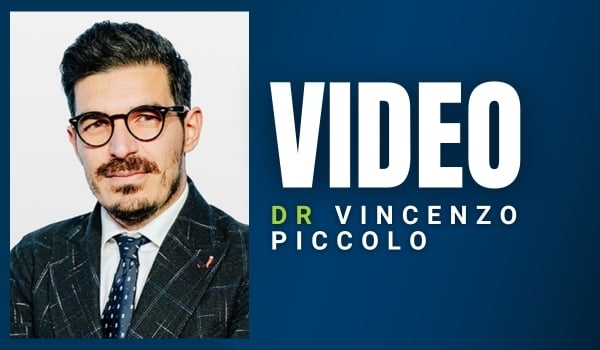
Dr Vincenzo Piccolo explores hidradenitis suppurativa in children and adolescents, including early signs, associated conditions, and treatment approaches.
Hidradenitis suppurativa is a chronic inflammatory skin condition that can begin in childhood or adolescence, yet diagnosis is often delayed. Recognising early signs is important to help patients access appropriate treatment before the disease progresses.
In this video, Dr Vincenzo Piccolo explores the clinical presentation of hidradenitis suppurativa in younger patients, highlighting features that may be overlooked or mistaken for other skin conditions.
Early signs can include flexural comedones, particularly double-opening comedones in areas such as the axillae and groin. Recurrent inflammatory nodules, abscesses, and lesions affecting the buttocks or breast region may also indicate hidradenitis suppurativa. Persistent or recurrent lesions that do not respond to standard antibiotic treatment warrant further consideration.
Dr Piccolo also discusses associated comorbidities, potential syndromic presentations, and treatment approaches for children and adolescents, emphasising the importance of individualised management.
For GPs, familiarity with these presentations can support earlier recognition, appropriate referral, and timely intervention to help reduce disease progression and its impact on quality of life.
Watch the video to explore the clinical features of paediatric hidradenitis suppurativa and strengthen your understanding of this often under-recognised condition.
Please note: This video contains graphic medical images of children. Viewer discretion is advised.
Watch the presentation
Next steps in your learning journey
🎓 Certificate Courses in General Dermatology
Deep-dive into our university-assured, structured pathway from foundation to subspecialisation in GP dermatology. ➡️ Explore program >
🎓 Short Courses in General Dermatology
Explore short, single-topic CPD courses in focused area of dermatology. Complete in less than 10 hours, from $195. ➡️ Browse Dermoscopy short courses >
🎓 HealthCert 365 subscription
Prefer flexible learning across many topics? Access 4,000+ CPD hours on-demand with HealthCert 365 — any topic, any time, one flat annual fee. ➡️ Discover HealthCert 365 >
Explore more free educational content in General Dermatology >
About Dr Vincenzo Piccolo
 Head of the Paediatric Dermatology Service, Dermatology Unit, University of Campania, Naples, Italy
Dr Vincenzo Piccolo graduated in Medicine and completed his specialist training in Dermatology in Naples. His main areas of interest are paediatric dermatology and dermoscopy. In 2021, he obtained the National Scientific Qualification as Associate Professor of Dermatology (06/D4 – Cutaneous Diseases, Infectious Diseases and Digestive Diseases). He teaches in the second-level Master’s programmes in Oncologic Dermatology and Trichological Sciences at Vanvitelli University and is a tutor for the International Master’s programme in Hair and Nail Dermoscopy at Cardiff University. He works as a Senior Consultant Dermatologist, with expertise in paediatric dermatology, general dermatology, dermoscopy, trichoscopy, and dermato-oncology.
His academic and research contributions include 214 international publications (H-index of 25 as at 30 June 2026), four books, and eight book chapters. An active scientific communicator, he has delivered approximately 200 national and international lectures and has organised numerous scientific congresses in dermatology. He also lectures in online international courses for audiences in Sweden and Australia.
He is Section Editor for the Paediatric Dermatology section of Dermatology Practical & Conceptual and a certified reviewer for several international scientific journals. He is a member of several national and international dermatological societies, Co-Chair of the European Academy of Dermatology and Venereology Task Force in Paediatric Dermatology, and an Editorial Board Member of the International Society of Pediatric Dermatology.
He is married and has two children.
CPD self-submission
You can self-record CPD for this blog. Quick Log CPD hours with the RACGP/ACRRM via the usual self-submission process. You will be asked to reflect on what you have learned, and you will require supporting evidence such as a screenshot. For more information, view the: RACGP CPD guide | ACRRM CPD guide