Pediculosis capitis, or head lice, is a common parasitic infestation. It predominantly affects children between the ages of three and twelve. It is also a frequent reason for primary care visits. Although benign, head lice can cause significant distress for families. The infestation often leads to unnecessary school absenteeism and inappropriate treatment. GPs play a central part in accurate diagnosis, evidence-based treatment, and family counselling.
How to confirm a head lice diagnosis
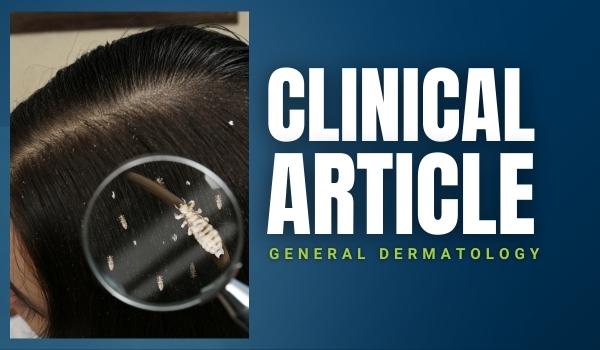
Diagnosis should be based on identification of live lice, not just nits (eggs). This is because many children are misdiagnosed based on nits alone, which may represent inactive infestation or prior infection.
Clinical clues of head lice:
- Scalp pruritus (most common symptom), especially occipital and postauricular areas
- Visible lice or nits attached firmly to hair shafts, typically within 6 mm of the scalp
- Excoriations or secondary bacterial infection in severe cases
The best diagnostic method includes wet combing with a fine-toothed lice comb, which is more sensitive than visual inspection.
First-line treatment
It is very important to start the treatment only when live lice are confirmed.
Topical pediculicides
Common first-line options include:
- Permethrin 1% lotion/shampoo is the first-line treatment option in many regions. The lotion/shampoo is applied to damp hair, left for 10 minutes, and then rinsed. The treatment should be repeated in seven to ten days.
- Pyrethrins + piperonyl butoxide is another effective first-line treatment, but should be avoided in patients with ragweed allergy.
- Dimeticone-based products. These are non-insecticidal and increasingly favoured due to low resistance rates.
Prescription options (for treatment failure or resistance)
The choice of prescription treatment should consider local resistance patterns, patient age, cost, and safety profile. The usual options include:
- Malathion 0.5%
- Spinosad 0.9%
- Topical ivermectin 0.5%
- Oral ivermectin (off-label in some regions; avoid in children <15 kg and pregnancy)
Mechanical removal
Recommend wet combing every three to four days for two weeks using a metal nit comb, even when pharmacologic treatment is used. This improves eradication and reassures families.
Manage household contacts
Check all household members and treat only those with confirmed live lice. Prophylactic treatment of asymptomatic contacts is generally not recommended unless infestation is highly likely.
Advise families to:
- Avoid sharing combs, hats, headphones, and bedding during active infestation
- Wash recently used pillowcases, hats, and brushes in hot water (>55°C) or seal non-washable items for 48 hours
Extensive home fumigation is unnecessary.
Address common misconceptions
Primary care counselling is essential:
- Nits alone do not equal active infestation
- Lice do not reflect poor hygiene
- Children can usually return to school after the first treatment (“no-nit” policies are not evidence-based).
When to refer
Consider dermatology or paediatric referral if:
- Recurrent treatment failure despite adherence
- Diagnostic uncertainty
- Severe excoriation or secondary infection
- Suspected resistance or adverse reactions
Successful lice management depends on accurate diagnosis, appropriate treatment, and parental education. Most cases resolve with correct first-line therapy and follow-up, while unnecessary retreatment and anxiety can be minimised through clear physician guidance.
- Dr Rosmy De Barros
Next steps in your learning journey
🎓 Certificate Courses in General Dermatology
Deep-dive into our university-assured, structured pathway from foundation to subspecialisation in GP dermatology. ➡️ Explore program >
🎓 Short Courses in General Dermatology
Explore short, single-topic CPD courses in focused area of dermatology. Complete in less than 10 hours, from $195. ➡️ Browse Dermatology short courses >
🎓 HealthCert 365 subscription
Prefer flexible learning across many topics? Access 4,000+ CPD hours on-demand with HealthCert 365 — any topic, any time, one flat annual fee.
➡️ Discover HealthCert 365 >
Explore more free educational content in General Dermatology >
CPD self-submission
You can self-record CPD for this blog. Quick Log CPD hours with the RACGP/ACRRM via the usual self-submission process. You will be asked to reflect on what you have learned, and you will require supporting evidence such as a screenshot. For more information, view the: RACGP CPD guide | ACRRM CPD guide
References
- Leung, A. K., Fong, J. H., & Pinto-Rojas, A. (2005). Pediculosis capitis. Journal of pediatric health care : official publication of National Association of Pediatric Nurse Associates & Practitioners, 19(6), 369–373. https://doi.org/10.1016/j.pedhc.2005.07.002
- Feldmeier H. (2012). Pediculosis capitis: new insights into epidemiology, diagnosis and treatment. European journal of clinical microbiology & infectious diseases : official publication of the European Society of Clinical Microbiology, 31(9), 2105–2110. https://doi.org/10.1007/s10096-012-1575-0
- van der Wouden, J. C., Klootwijk, T., Le Cleach, L., Do, G., Vander Stichele, R., Knuistingh Neven, A., & Eekhof, J. A. H. (2018). Interventions for treating head lice. The Cochrane Database of Systematic Reviews, 2018(5), CD009321. https://doi.org/10.1002/14651858.CD009321.pub2
- Leung, A. K. C., Lam, J. M., Leong, K. F., Barankin, B., & Hon, K. L. (2022). Paediatrics: how to manage pediculosis capitis. Drugs in context, 11, 2021-11-3. https://doi.org/10.7573/dic.2021-11-3
- Heukelbach, J., Pilger, D., Oliveira, F.A. et al. A highly efficacious pediculicide based on dimeticone: Randomized observer-blinded comparative trial. BMC Infect Dis 8, 115 (2008). https://doi.org/10.1186/1471-2334-8-115
- Apet, R., Prakash, L., Shewale, K. H., Jawade, S., & Dhamecha, R. (2023). Treatment Modalities of Pediculosis Capitis: A Narrative Review. Cureus, 15(9), e45028. https://doi.org/10.7759/cureus.45028
- Nutanson, I., Steen, C. J., Schwartz, R. A., & Janniger, C. K. (2008). Pediculus humanus capitis: an update. Acta dermatovenerologica Alpina, Pannonica, et Adriatica, 17(4), 147–159.Top of FormBottom of Form