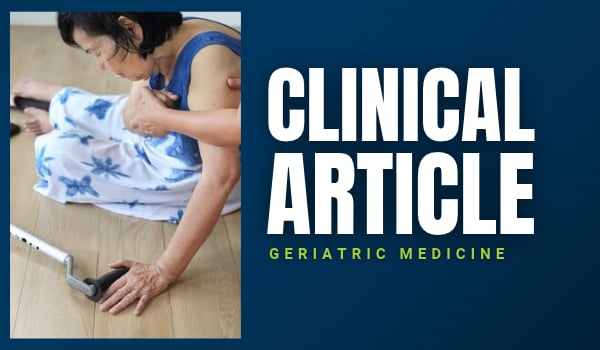
In general, falls are a major cause of injury, functional decline and loss of independence in older adults. However, we cannot attribute them to a single cause. It is more correct to look at them as a consequence of the interaction between age-related physiological changes, chronic diseases, medication effects and environmental hazards. GPs in primary care have the best opportunity to identify at-risk individuals, implement preventive interventions, and ensure appropriate assessment after a fall.
How to identify patients at risk of falls
GPs should routinely ask adults aged 65 years and older whether they have fallen during the previous 12 months. For each fall, this enquiry should include the information about:
- Frequency,
- Circumstances,
- Dizziness,
- Loss of consciousness,
- Gait instability,
- Fear of falling, and
- Consequences
A comprehensive assessment is particularly important for patients with recurrent falls, frailty, fall-related injuries, loss of consciousness or an inability to rise independently after a fall. Assessment should include gait, balance, muscle strength, mobility, vision, hearing, footwear, neurological function, cognition, and functional status.
Additionally, the “Timed Up and Go” test or gait-speed assessment can help identify mobility impairment.
It is essential to review cardiovascular factors, including lying and standing blood pressure, and obtain an electrocardiogram when indicated. Evaluate comorbidities such as Parkinson’s disease, peripheral neuropathy, arthritis, and osteoporosis. Medication review is essential, particularly for sedatives, psychotropic drugs, opioids and medications associated with hypotension. Assess nutritional status, alcohol consumption and home safety hazards.
Efficient fall prevention strategies
The best preventive strategies are tailored for each individual. However, they should focus on modifiable risk factors. Exercise, which includes balance training, functional movements, and progressive muscle strengthening, is fundamental. Such activities should match the patient’s functional capacity. Supervised physiotherapy is a useful addition in certain cases. Tai Chi may be beneficial for suitable community-dwelling older adults.
Some medications can increase the fall risk. That’s why all therapies require review, with potential rationalisation or gradual withdrawal. Also, it is vital to identify and manage orthostatic hypotension, dehydration, and relevant cardiovascular disorders. Furthermore, correcting visual impairment where possible, assessing footwear and foot problems, and ensuring appropriate use of walking aids is important.
Home modifications may include improving lighting, removing loose rugs and clutter, installing grab rails and providing non-slip surfaces.
Last but not least, clinicians should assess osteoporosis and fracture risk, and address nutritional deficiencies according to clinical indications and local guidance.
Patient management after the fall
Initial management prioritises immediate safety and identification of serious injury. This includes assessing vital signs, consciousness, pain, mobility, and the circumstances of the event.
When serious injury is suspected, urgent hospital assessment is indicated. Examples include (but are not limited to):
- Hip fracture
- Head injury
- Altered consciousness
- Cardiovascular instability
- Neurological deficit
When the patient is stable, perform a structured assessment to identify the cause, consequences and contributing factors. The assessment is based on clinical findings and may include electrocardiography, blood tests or imaging. Consider syncope, infection, dehydration, medication effects and acute neurological or cardiovascular disease.
Patients with recurrent falls, frailty, significant injury or unexplained falls should receive comprehensive, multidisciplinary assessment and an individualised prevention plan. GPs should assess the fear of falling, functional decline, the need for rehabilitation, home support, or caregiver involvement. Arrange follow-up to review recovery, implement preventive measures and reassess mobility.
- Dr Rosmy De Barros
Next steps in your learning journey
🎓 Short Courses in Geriatric Medicine
Explore single-topic CPD courses in focused areas of geriatric medicine and aged care for GPs. Complete in less than 10 hours, from $195.
➡️ Browse Geriatric and Aged Care short courses >
🎓 Certificate Courses in Geriatric Medicine
Dive deeper with our university-assured, structured Professional Diploma pathway to elevate your skills in primary care geriatric medicine.
➡️ Explore Certificate program >
🎓 HealthCert 365 subscription
Prefer flexible learning across many topics? Access 4,000+ CPD hours on-demand with HealthCert 365 — anytime, any topic, one flat annual fee.
➡️ Discover HealthCert 365 >
Explore more educational content in Geriatric Medicine
CPD self-submission
You can self-record CPD for this blog. Quick Log CPD hours with the RACGP/ACRRM via the usual self-submission process. You will be asked to reflect on what you have learned, and you will require supporting evidence such as a screenshot. For more information, view the: RACGP CPD guide | ACRRM CPD guide
References
- Ortega-Bastidas, P., Gómez, B., Aqueveque, P., Luarte-Martínez, S., & Cano-de-la-Cuerda, R. (2023). Instrumented Timed Up and Go Test (iTUG)-More Than Assessing Time to Predict Falls: A Systematic Review. Sensors (Basel, Switzerland), 23(7), 3426. https://doi.org/10.3390/s23073426
- Aleixo, P., & Abrantes, J. (2024). Proprioceptive and Strength Exercise Guidelines to Prevent Falls in the Elderly Related to Biomechanical Movement Characteristics. Healthcare (Basel, Switzerland), 12(2), 186. https://doi.org/10.3390/healthcare12020186
- Wiersinga, J., Jansen, S., Peters, M. J. L., Rhodius-Meester, H. F. M., Trappenburg, M. C., Claassen, J. A. H. R., & Muller, M. (2024). Hypertension and orthostatic hypotension in the elderly: a challenging balance. The Lancet regional health. Europe, 48, 101154. https://doi.org/10.1016/j.lanepe.2024.101154
- Schini, M., Johansson, H., Harvey, N. C., Lorentzon, M., Kanis, J. A., & McCloskey, E. V. (2024). An overview of the use of the fracture risk assessment tool (FRAX) in osteoporosis. Journal of endocrinological investigation, 47(3), 501–511. https://doi.org/10.1007/s40618-023-02219-9
- De Simone, B., Chouillard, E., Podda, M. et al. The 2023 WSES guidelines on the management of trauma in elderly and frail patients. World J Emerg Surg 19, 18 (2024). https://doi.org/10.1186/s13017-024-00537-8