

SHORT COURSES IN
Children’s health: sport and exercise
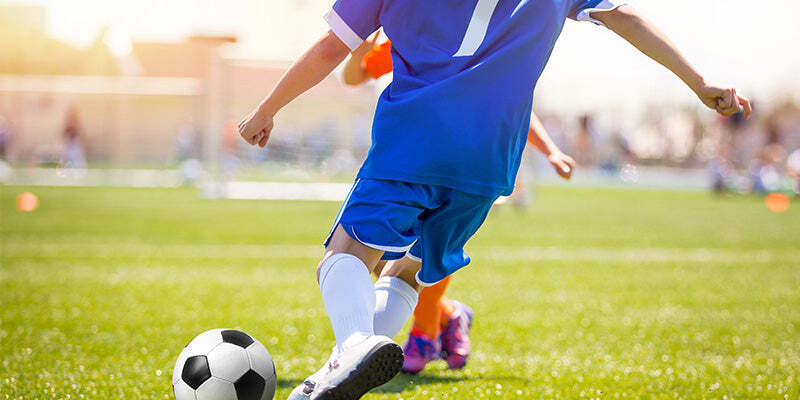
Recommend a clinically appropriate management plan for children undertaking higher level sports participation.
Meet your presenter
Mr Ronnie Bateman
BPhysio BPodiatry Masters Musculoskeletal Physio
Podiatrist & physiotherapist
Ronnie Bateman attained his professional qualifications from LaTrobe University, Melbourne. In 1995, he graduated with a Bachelor of Physiotherapy and returned to study a Bachelor of Podiatry and a Masters of Musculoskeletal Physiotherapy.
Mr Bateman has worked in several sectors including elite sport, aged care and disability, occupational, public health, and private practice.
As a clinician, he promotes treatment pragmatism, and concedes that there are exceptions to most supported clinical and research-based beliefs.
As a podiatrist, he enjoys the challenge of complex foot/ankle conditions, in addition to assisting more proximal pathologies (such as knee pain) by altering distal biomechanics. Podiatric interventions he adopts can include one or more of the following: shoe alterations, insole alterations, over-the-counter orthotics, hand-made insoles/orthotics, strapping, padding, and off-loading. He continues to make devices from casting to fitting where necessary.
As a physiotherapist, Mr Bateman will consider evidence-based research and “old-school” manual therapy options in an attempt to make maximum improvement in the shortest timeframe.
As a lower-limb musculoskeletal practitioner, he can apply top-down (physiotherapy based) and bottom-up (podiatry based) approaches.
Principles and philosophies supported include:
Mechanical problems have mechanical solutions.
Maximal healing occurs in an environment of minimal symptoms.
Rather than “no pain, no gain”, the preference is “more brain, less brawn”.
Like bread, chronic soft-tissue scar invariably does well with a knead.
“Trial and error” in musculoskeletal therapy is valuable if risks are understood and mitigated. Results-based therapy is about assessing, intervening with low-risk and re-assessing effect.
The positive effect of braces in the acute phase are generally underrated and are invariably dispensed with too soon.
Continue your learning
Our short courses provide focused, standalone learning. If you wish to deepen your expertise, you can stack them towards a broader certificate pathway.
Progress to the full certificate course
 Certificate pathway
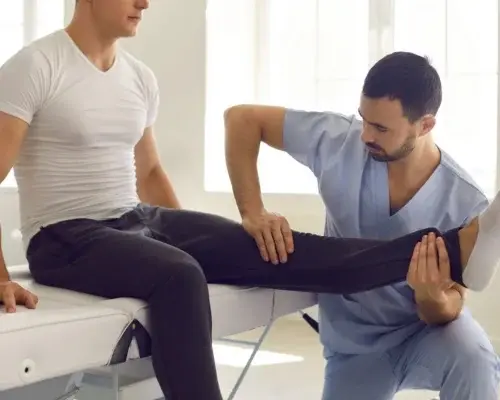
Professional Diploma of Musculoskeletal and Sports Medicine
Gain the skills to diagnose and manage patients with musculoskeletal conditions and sports injuries in primary care.
View certificate courseExplore related short courses
Unexplained symptoms - symptoms with no firm diagnosis
"Unexplained Symptoms" delves into the challenges of diagnosing and managing patients with persistent symptoms that ...
Legal and illegal drugs in sport
"Legal and Illegal Drugs in Sport" is a comprehensive course designed to educate healthcare professionals on the use of ...




.png?width=100&height=100&name=Jules%20Wynyard%20edit%20circle%20(1).png)